Kwara State, Nigeria — since 2015
Clay from the land.
Form that will not sit still.
Nigerian contemporary ceramic artist and sculptor. Vessels and sculptures that do not settle into one category.
About
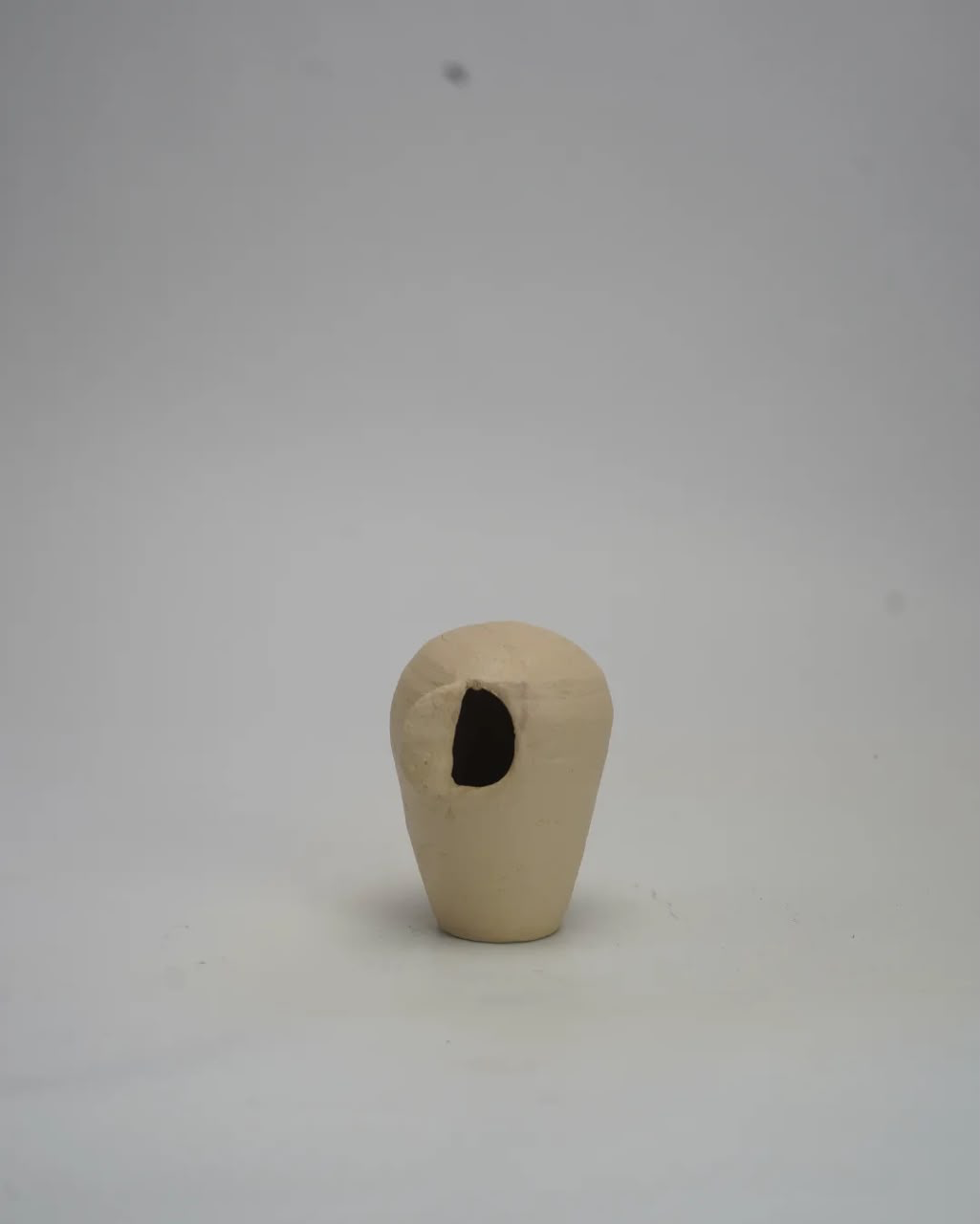
Abdullahi Abdulrasheed has spent much of his career living and working in Nigeria. From a studio in Kwara State he makes vessels and sculptures that do not settle into one category.
The work begins with clay — especially from Ile-Ife, Sokoto and Ekiti — and with materials the continent has already used: newspaper, bottles, discarded matter brought back into form. What results is sculpture that remembers the pot, and pottery that behaves like sculpture.
Practice
Between vessel and sculpture
Abdullahi’s objects are built by hand and assembled from more than one source. Some are closed forms. Some keep a rim or a belly. None are made to decorate a room. They are made to stand.
Reuse and transformation sit inside the making. So does a wish to remain connected to Africa without being limited by place. Certain works look at colonial history, consumption, waste and the environment. Those questions are held in the object. They are not printed on it.
At the centre is a formal language that is his own: weight, surface, stillness, and the evidence of the hand.
Materials
Earth, and what earth has already held
Ile-Ife, Sokoto, Ekiti
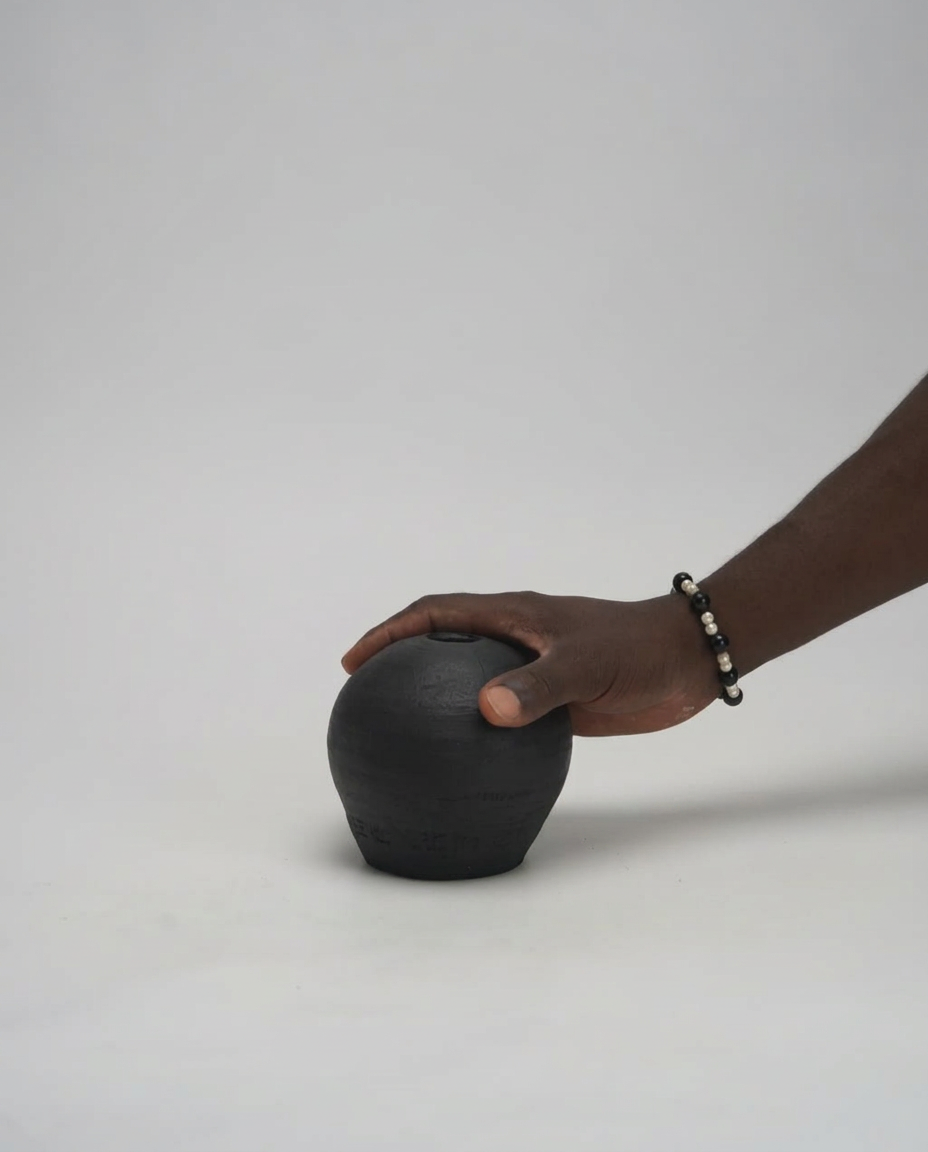
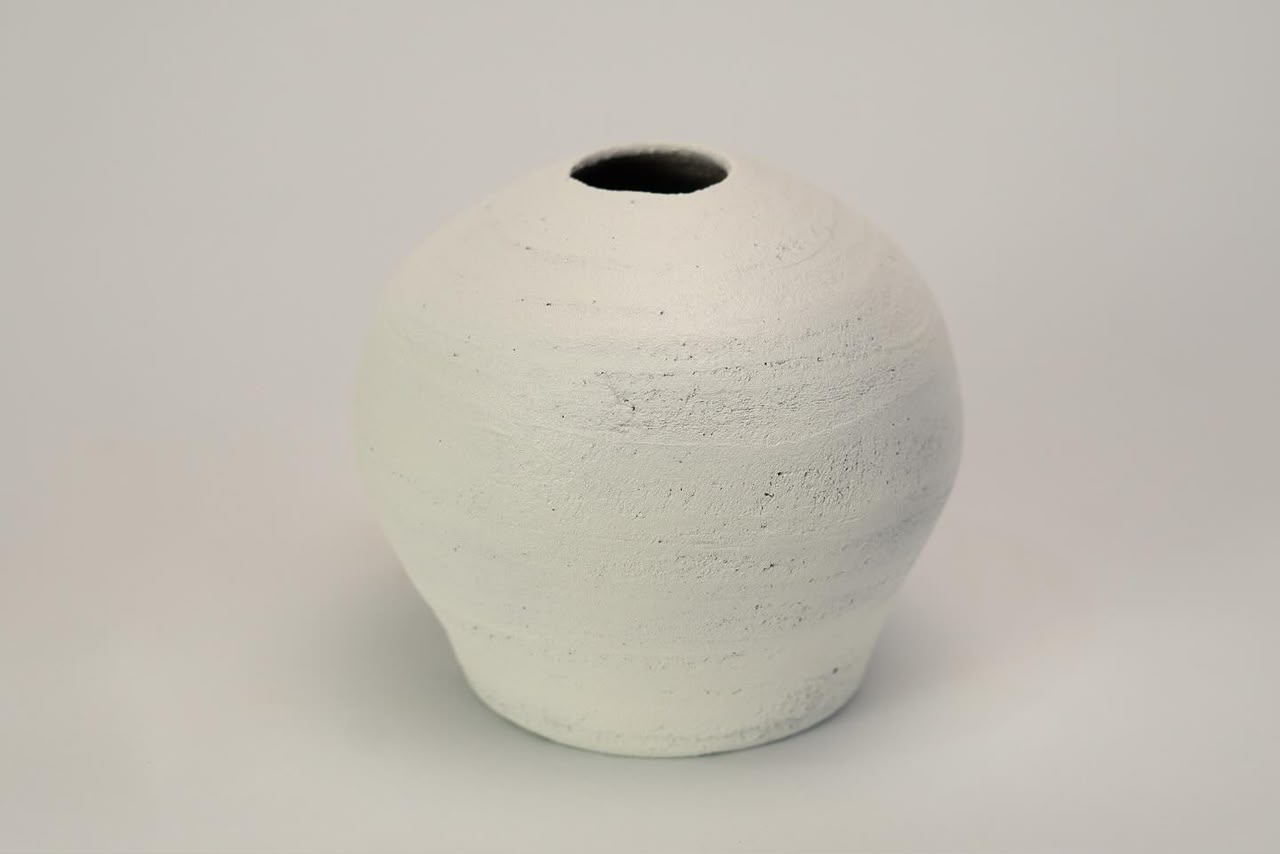
Clays taken from named places. Each body fires differently. Colour, grit and shrinkage are part of the meaning.
Newspaper, bottles, discarded matter
Waste is not a theme added afterwards. It becomes structure and skin. The sculpture is a record of use as well as of making.
Biography
Abdullahi Abdulrasheed works in the long shadow of the pot.
A Nigerian contemporary artist of clay and assembled form, he has remained close to the ground that first taught him making. His studio stands in Kwara State. From there, since 2015, he has shaped objects that will not choose between vessel and sculpture, forms that remember use, then quietly refuse it.
The clay arrives with names: Ile-Ife, Sokoto, Ekiti. Each body carries a different grain, a different memory of land. Into this earth he sets what the continent has already spent: newspaper, bottles, the residue of living. Nothing is ornamental in this meeting. Earth and discard are asked to become one presence.
His work can hold difficult histories. Colonial afterlives. The appetite of consumption. Waste that does not disappear. Yet the sculptures do not announce their subjects. They stand. Weight, skin, silence, the ridge left by the hand: these are the language. What cannot be said in argument is kept in form.
Abdulrasheed studied at Kwara State University. Works rest now among collections in Kwara, at Esie Museum, and in the permanent holding of the Benin Museum. The objects travel. The practice stays rooted.
Artist statement
I listen to clay before I ask it to become anything.
The clays I reach for are not generic earth. They are Ile-Ife, Sokoto, Ekiti: places first, material second. They already know fire. They already know the vessel. I do not correct that knowledge. I let it lean toward sculpture.
I also work with what has been thrown aside. Newspaper. Bottles. The thin architecture of waste. These things have already lived a public life. When they enter a form, they do not become clean. They become honest.
I want the work to remain of this continent without being confined by it. Africa is not a motif I apply. It is the condition of the making: the land under the studio in Kwara, the history inside the clay, the refuse at the edge of the road.
Some pieces look toward colonial time, toward appetite and remainder. I do not illustrate those things. I give them a body and a temperature. A closed mouth. A smoked skin. A mass that occupies a room the way a stone occupies bush: without permission, without explanation.
I leave the trace of the hand. To polish it away would be to lie about how an object comes into the world.
Strength, to me, is stillness that does not empty.
Abdullahi Abdulrasheed
“The clay is African before it is anything else. The discarded materials are African too. I am interested in what a form can hold after function has left it — history, waste, land, and the strength of a quiet object.”